(I’m going to hop back in time to the end of March, just as I was leaving Sudan. Forgive me the lapse in time, but hopefully the story will be worth the wait. It's a bit long, so grab a cup of tea first!)
Leaving Sudan that last day was hard, but I had already shed all my tears. So my face was dry.
Our flight left early that morning carrying our pilot, me, two other staff members (Dennis and Margaret), and a handful of Kenyan pastors who had been visiting to teach.
Our first stop was Rumbek --a forty-five minute flight from Tonj and our official exit site for Sudan. With the laws changing we needed to get our visas stamped properly to leave the country. But more than that, it was the perfect occasion to meet up with my Rumbukian friends for one final goodbye and to pick up a necklace that was on back-order.
This necklace was a mixture of plastic rods, Sudanese beads, and bullet shell casings. It epitomized the essence of S. Sudan for me, and I wanted it as one last memento.
Since it was finally ready, my friends met me at the airport with the necklace during my lay-over. I was so pleased with how the necklace had turned out, that I put it on immediately.
Touching it lightly with the tips of my fingers, I smiled to think of this last token of Sudan, then boarded my flight for Loki --the next stop on our flight home.
After Loki, we boarded another puddle-hopper for Nairobi. As we bounced our way back to Kenya, I noted the even weight of the shells on my neck and smiled. The turbulence was particularly difficult that day, but I didn’t notice it much. My heart was already in too much upheaval from my recent goodbyes.
Since our plane was small it took us longer to get to our destination and we landed late in the evening; the hustle of unloading bags and jostling boxes took my full attention and I didn’t pay attention to the guard motioning to my neck. I just walked on past him to the taxi stand.
Initially I thought he was just admiring my prize and so I nodded my thanks and moved on. But as I waited for my ride to show up, the airport guard brought a policeman up to me and pointed accusatorially at my neck.
Finally the blue-suited officer spoke:
-- “This necklace is offensive. Come with me,” he barked, signaling for me to follow.
-- “Huh?”
Confused how a necklace could be ‘offensive’, I wrinkled my brow and asked him to repeat himself.
And he did just that.
-- “This is offensive. This is very offensive. Come with me,” he continued on. Initially I followed him as he marched with irritated purpose... until he took me behind barred gates.
-- “What is the meaning of this? I’m not going to go with you... my friends are there,” I protested politely, signally to my friends standing by the curb. “I don’t understand the problem.”
Thin-lipped to begin with, he proceeded to pinch his lips into even tighter lines until they all but disappeared. Then he pointed at my necklace with disdain and said, “This is offensive. This is offensive!” He was starting to sound like a broken record.
“This is absurd,” I laughed. “I’ll take it off if it is offensive,” I said, turning my back to him and walking back to my friends. By the time I reached them, the ‘offensive’ object was removed and in my pocket.
I figured that I’d committed some kind of social gaff, and was trying to politely cover up my blunder. But by the time I got back to my portion of the curb, Mr. Thin Lips was at my heels.
-- “You have to go to the police station!” he insisted, pointing to a concrete building around the corner.
-- “What?” I sputtered. “Why?”
It’s at this point my driver, then Dennis, then two of the pastors on my flight all chimed in on my behalf. As they warbled in Kiswalhili, I tuned them out. All I could think of was how ridiculous Kenya was... yet again.
I mean... come on. I’d taken off the ‘offensive’ article. What was the big deal?
By this time the thinned-lipped officer was now red --as red as his charcoal complexion permitted. And as time lapsed, his color deepened.
With more annoyance than fear, I watched my friends banter and beg. They seemed scared for me, but for the life of me I couldn’t understand why.
Eventually, Mr. Thin Lips climbed into our taxi --AK47 cradled in his arms-- and escorted us to the police station. Everyone around me looked stressed, but all I felt was annoyed. This was too much pompous chicken scratching in the dirt for one day. I mean, come on. I’d already taken off the necklace. What else did they want?
The station was literally around the corner and we got there in no time. As we piled out of the taxi, I still couldn’t figure out the hubbub. And... I was too tired to care.
Three steps and we entered the police station only to be greeted by three more thin-lipped Blue Suits. My accuser then confiscated my necklace and handed it to his comrades.
--Seriously, what was his deal?
He held it high like a prized medallion for all his friends to see. Five copper bullet casings interspersed with plastic and ceramic bobbles hung accusatorially... but I still couldn’t figure out why.
First my friends spoke in my defense. But they switched so quickly between Kiswalhili and English that I could not follow the conversation. But what I did grasp was that they wanted to fine me... no... they wanted to put me in jail.
It’s at this point, I took a step back and watched. What was I missing?
All the while, my heart was calm. I didn’t feel the slightest bit stressed by it all. If they wanted to put me in jail, I’d go. Seriously, what did I care? As best as I could see, this was just another shake down for a bribe.
My necklace exchanged hands a few more times, while the story starting shifting. Only when they started threatening my Kenyan friends with culpability did I perk up. One officer kept insisting that Dennis was Kenyan and therefore should have know about my offensive act. Perhaps he should be fined instead.
It’s at this point things finally clicked in my brain, and I started reinterpreting the conversation in my head.
“Offensive must mean something else in Kenya,” I thought to myself. But the only definition that I could conclude by the circumstances was “Illegal”.
So I inserted “illegal” where they said “offensive”, and it all fell together. They wanted to arrest me, put me in jail, then fine me for bringing in illegal contraband into their country.
Duh!
How could I be so dense? No wonder they were all stressed and I was not!
-- Ignorance truly is bliss!
Once I realized I was smuggling in contraband, I was even more willing to go to jail. Honestly, part of me was curious what it’d be like. I’ve never been to jail in the States before... why not go to one in Kenya!
But I didn’t tell them I wanted to go to jail. Instead, I interrupted the long discussion with a slight raise of my hand.
-- “Excuse me. May I speak now?” I asked as humbly as I could. The room quieted down to hear what I had to say, and the main Blue Suit motioned for me to speak.
-- “I am so sorry. I am not from here, and I am just now starting to understand,” I began. “I realize now that I’ve done something illegal, is that right?” I stressed the word ‘illegal’ and locked eyes with my accusers. They nodded, a bit relieved that this silly American was finally clueing in to the severity of the situation.
-- “Also, I must sincerely apologize to you, Sir,” I said motioning to Mr. Thin Lips. “I am so very sorry I did not understand that ‘offensive’ meant ‘illegal’. Had I known I would never have disobeyed you.”
I meant every word.
-- “Sirs, please tell me. What do I need to do to fix this?” This one question settled the room instantly and they switched back to Kiswalhili.
Although we’d already wasted over an hour in discussion by this point, it looked as if I had not yet spoken to everyone; I still needed to speak to the head hancho. It’s at this point I was ushered into the back office to meet their chief.
The room was large but crowded with an oversized conference table, a dozen metal chairs, and a clunky desk. Behind the desk sat a opened-faced man in his forties. He greeted me kindly, indicating the chair before him. And I sat down.
-- “You know this is very offensive in our country,” he explained with a slight smile. I nodded then apologized again.
-- “Yes. I understand that now. I would never have brought it here if I had known. Please forgive me.” I felt complete peace while we spoke.
-- “Even having one of these shells gives me permission to fine you 10,000 shillings and put you in jail,” he explained clearly. “You have five of them!”
-- “Yes. I do. I am so sorry.”
-- “If I put you in jail, you will have to be here all weekend,” he explained, watching my face while he spoke. “The judge must see your case,” he continued, “and he does not appear until next Monday.”
It was Friday evening. That meant I’d be spending the weekend in jail. I didn’t love the idea... but again. I didn’t mind if I had to go. God would work it out. I had utter peace.
Then he hesitated a bit, so I spoke.
-- “Is that what you want to do?” I asked him kindly. “You tell me. I am a foreigner here. I will do whatever you say. How do I fix this?”
He laughed out loud at this point, and sat back in his chair. As we studied each other, he continued to explain that if he put me in jail, I’d be there all weekend. I think he wanted me to understand the severity of the situation. I assured him that I did.
I listened intently, willing and ready to serve the time for my crime. I told him that if he thought that was necessary, then that was necessary. Then I smiled.
I wasn’t interested in losing my necklace... but I figured that it was long gone by this time. Instead I focused on whether or not I’d be spending the weekend in jail.
I couldn’t tell if he was waiting for a bribe or not. So I continued to smile and waited.
He just looked at me again, laughed, then changed the conversation.
-- “Why would you wear a necklace like this?” he joked, holding the necklace up for us both to admire.
-- “I find it very beautiful. I paid a lot of money for it,” I said sweetly.
That just made him laugh harder.
-- “Why would you pay money for this?” he said with mock surprise.
-- “It’s a beautiful reminder of Sudan. Don’t you see how beautiful it is?”
He laughed whole-heartily by this point, looking back and forth between me and the necklace. I could see he was still not convinced, but there was no denying... he was thoroughly entertained.
He hesitated a few seconds then finally said: “I will not arrest you. Instead I will take all your bullet shells and you will take your beads.”
I nodded that such an agreement was more than fair... then he proceeded to pull my necklace apart.
I was sad to lose my necklace within hours of buying it.... but I was more relieved not to spend the weekend in jail.
With string, beads and plastic bobbles in hand, I stood and thanked him for his kindness, shook his hand briefly, then turned to leave.
With my hand on the doorknob, I turned to tease him one last time. “Make sure you don’t make a necklace with those shells!” I joked “Your wife will not appreciate it!”
Our eyes met and I held my breath for his response.
We locked eyes a moment and then he laughed so loud it echoed down the hall and into the lobby. On my way out his officers asked what happened and I explained, “He took my shells and gave me my beads. I can go now.”
I walked toward the door confidently, but my friends hesitated to follow.
Once we were back in the car, Margaret asked, “Did you have to pay a bribe?”
-- “No. He did not ask me for one.”
-- “But...” she hesitated again, “they cannot ask. You have to just offer.”
-- “Well then, no. I did not offer. I was willing to go to jail.” She looked at me in disbelief, so I continued. “I was NOT willing to pay any bribes. I think he realized that and just let me go.”
Only once we were well on our way, did it occur to me how annoyed my friend had been. Apparently, my stubborn refusal to go with the officer, my initial denial of all guilt, and my insistence that he not take my necklace away... had put them in quite the bind. So I apologized.
I really was sorry I’d upset them... but I wasn’t sorry for the experience.
One thing’s for sure... the next time a Kenyan accuses me of being ‘offensive’, I’ll know what he means!
Monday, July 30, 2012


Sunday, July 29, 2012
Gnarly-faced Second Cousin.
So as strange as this might seem to read... I’m baaa-aack!
Yes. It’s been ages since I’ve had something to say.
Yes. I’ve been terribly negligent of all things written and read.
Yes. Many of you have probably moved on to better and more interesting places.
--And if so, that’s great.
But for those die-hards out there just waiting for me to find my voice again.
Achemmm. Mi-mi-mi-mi... Counting. One. Two.... Counting. Three.
It’s found!
Before I start rambling about the amazing things I’ve seen, tasted, heard, and done in the last few weeks --achem.. I mean months-- let me explain my silence.
One: Purpose.
This blog was created for my prayer warriors and supporters to know where I am, what I’m doing, and how to be in prayer. Thus explaining the many stories of my adventures and need for prayer over the years.
But for reasons I’ll get into shortly, this summer has been different. Although there have been many adventures, I didn't know how to share them. Plus, I was unable to write about them while huddled in a fetal position moaning --thus leading me to my second reason.
Two: PTSD
I’m a missionary, but I’m far from perfect. I struggle like you. I fail like you. I hurt like you. And the chaos of leaving Sudan, coming back to the States, and having to change missions organizations was in many ways too much for me to bear.
“Why is it so hard this time?” I kept asking myself. But no answers came. Just silence.
It was only by the second month of my return that it occur to me that the reason I struggled to unfurl from the fetal position was because of PTSD (otherwise known as: Post-traumatic stress disorder). But even after knowing the cause, how could I fix it?
Was I broken forever? Would I have to leave the field? Why couldn’t I make a decision? Why couldn’t I feel anything anymore? Why did I hate talking about Sudan?
I didn’t have any answers. Nor did I find many who could help.
Plus there was the shame factor.
How could I suggest that I was dealing with the same kind of stress of our honored soldiers did? I never walked through war? I didn’t suffer bombings; I didn’t struggle against insurgents. In fact, most of my time in S. Sudan was uneventful and even... peaceful. Nothing horrible happened, so why would I struggle so much? How could it be PTSD?
It was a mystery to me.
Nevertheless, what I experienced this summer was far from culture shock. It was culture shock on speed. It left culture shock in the dust. This gnarly-faced, steroid-infused, toothless, inbred, back-woods, second cousin of culture shock took me for a ride and left me reeling.
But by His grace... the ride finally ended.
I can think again; I can feel again; I can write again. So here I am, writing to say Thank You.
Thank you for praying for me. Thank you for caring for me. Thank you for allowing me the time to send this ‘back-woods second cousin’ packing.
And with him gone... I’ve found my voice again.
So expect more stories soon. Very soon.
Thursday, July 12, 2012
Friday, June 15, 2012
Wednesday, June 13, 2012
Wednesday, May 30, 2012
Wednesday, May 2, 2012
Home?
For those of you who think I've fallen off the edge of the earth... be reassured. I'm alive and well. I'm currently soaking up two years worth of hugs in my old stomping grounds of Mesquite, Nevada.
It's good to be back in the States, but I honestly can't call it "Home". I laugh to myself when someone asks how it feels to finally be "home".
Home?
I'm baffled by the question, really. I tend to hesitate a bit before answering, almost as if I don't trust myself to speak.
"Home? Here? Oh, you mean how does it feel to be back in the States?" I clarify.
They nod excitedly, often expecting me to tell them all the wonderful things I missed.
But I can't lie. I've missed nothing. Nothing that the States has to offer... except my family and friends.
Usually, I answer their question with a smile and say, "I'm so happy to see you again. I missed you. Being with you feels like home!"
It's the truth. I no longer feel at home in America. My friends and family are what draw me here. America can keep its cushy couches, air conditioned cars, and fancy fandangled coffee makers. I can happily do without.
Yes. I'm American by birth, but my citizenship is in heaven. My passport may say USA... but I still find Sudanese sand in my shoes.
Even as I write these words, I'm reminded that my lack of connection is just another symptom of my reverse-culture shock.
I confess, it's much worse this time.
Please pray that I'm able to enjoy my time in the States, and reconnect with what really matters --family and friends. Thanks.
Tuesday, April 17, 2012
Thursday, April 12, 2012
War on the Horizon.
Whispers of war between Sudan and South Sudan echo in my ears. My heart aches. My bones shake.
Straining my eyes for a better view, turning my ears to the faintest rumble, I crouch in closer. Could war really be coming? Lord, no. Please, no.
What are these whispers?
Sudan is building its army.
Disputed towns have been sacked.
Peace negotiations have been suspended.
Please pray for the peace of South Sudan. Pray for this fledgling nation to find its feet. Also pray for Sudan. Pray that peace would rule the hearts of its leaders and that love would lace their actions.
Amen.
Sunday, April 8, 2012
Walking the Streets.

On my last day in Tonj, I went for one last walk in town. I wanted to get a few gifts --if they were to be found-- but I also wanted one last goodbye.
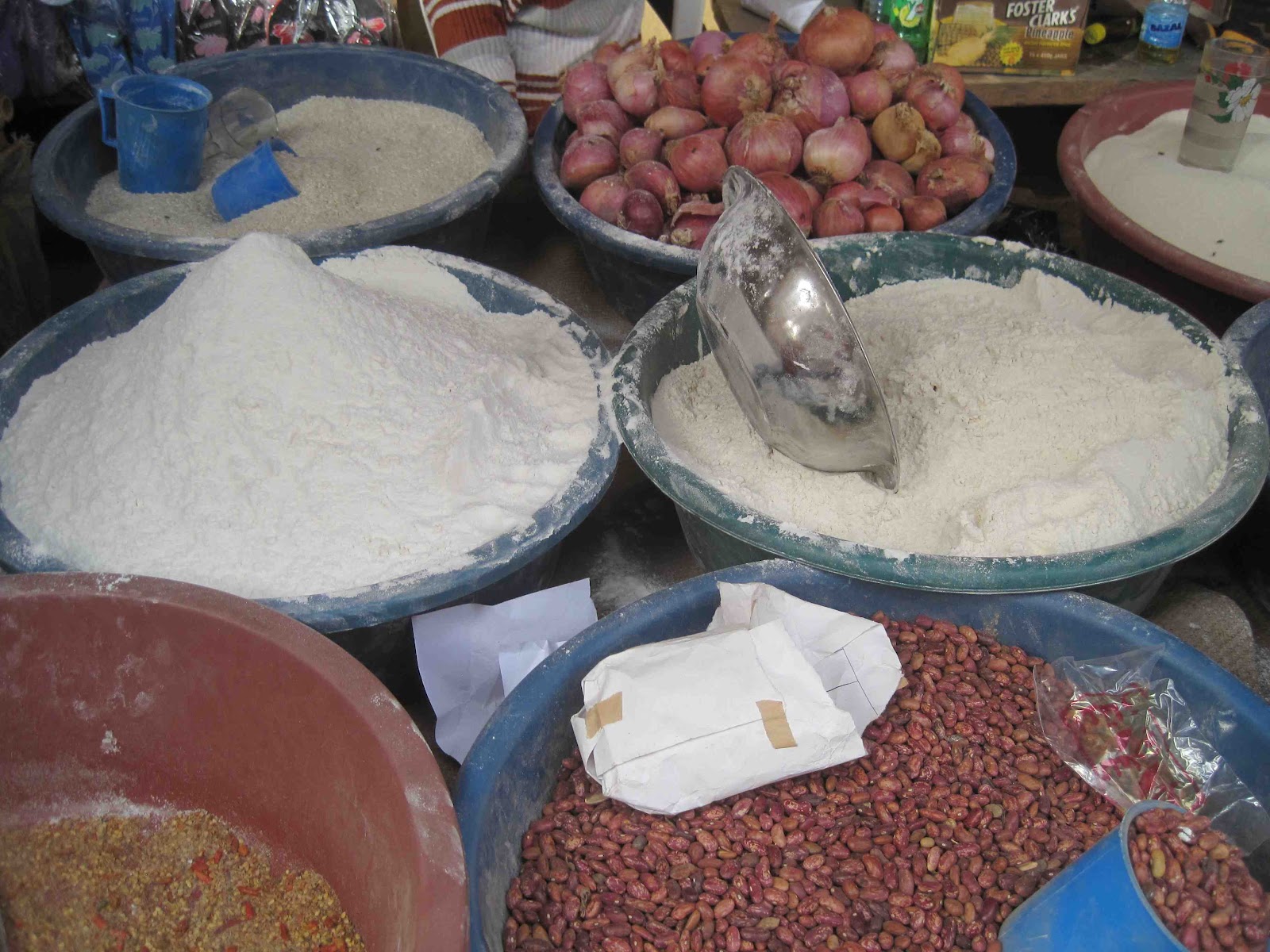 As my friend Mario and I walked about, familiar faces greeted me loudly in the market. Women I’d welcomed into the antenatal program, and who even delivered with me, called me over to their stalls to greet me.
When they saw my camera, they insisted on a photo. Gathering their children in close and squaring their shoulders proudly, they stood and sat stock still for me “to make a design” of them.

I would have stayed to chat, but it was already late. Mario needed to give me something at his sister’s house. So we waved our goodbyes.
As I walked past, a wrinkled woman motioned insistently that I had my fly down. When I checked to see if she was right, laughter rippled through the crowd.
It took me a few seconds to realize she was teasing me, but then I laughed along with her another wave of laughter shook the crowd.
In South Sudan, teasing is a national sport!
Mario called me through the crowd, impatient to get to his sister’s house, so I waved my final goodbyes and walked on.
Mario has worked with In Deed and Truth ministries for years, most recently as a translator and clinic health worker. Although he is young, his English is great.
Over the years, he has been a good friend to me. When I told him I would be leaving earlier than June, he shook his head in protest and said, “I am not comfortable with this...” I initially laughed at his choice of words, but they fit somehow.
--Changing countries, packing bags, saying goodbye... I’m not comfortable with it either.
As we walked, Mario veered me in the direction of his sister’s house. It was late in the afternoon by then, and she was doing laundry. When she saw us, she wiped her hands on her skirt and then extended her still wet hands with us in greeting.

On our arrival, her children stirred from their naps, and we sat in the plastic chairs next to them. As we talked, they milled about trying not to stare.
Mario explained to his sister that I was leaving early --the next day in fact! Surprise flashed across her face, then she quietly excused herself, saying she had “something small” to get me.
Turning away, she hurried inside her tukel. Meanwhile, Mario and I played with the slingshot I had just bought off a kid in the market.
Made of recycled bike tires, it was surprisingly accurate. But Mario insisted on shooting the goats. Poor, defenseless goats!
 A few minutes later, Mario’s sister returned with my gift --a brightly embroidered sheet with two intricately stitched peacocks facing each other. She wanted me to have something to remind me of Sudan.... as if I could forget!
I thanked her over and over, gushing over the beauty and skill involved.
What an honor!
 Honestly, saying goodbye has not been easy. The tears come at random times, surprising me by their inconvenient warmth.
The Sudanese --like most African cultures-- do not cry. It is seen as weak and portrays fear rather than love. So in my goodbyes, I did everything I could to not weep.
But I failed.
I failed with silent, languid tears. Large and heavy, they ran down my cheeks before I could bite them back. Excusing them with a wry smile, I tried to explain to my African friends that it was my way of saying I loved them.
They nodded that they understood... but looked away for my benefit.
Three of my translators tried not to cry with me as we said our goodbyes. They succeeded. I failed.
One privately called me aside to say goodbye, saying, “We will not forget you, Akuac.” As we spoke, my eyes filled with tears and I turned away.
Yes. Those are the words I was looking for...
South Sudan, I will not forget you.
Saturday, April 7, 2012
Handing-Over.

When I got back to Tonj to pack my things, I met Annie. She is one of the Kenyan nurse-midwife hired to replace me. That first night I didn’t have much time to talk, but by morning I was bursting with things to say.
It was handing-over time.
But how do I tell her two years worth of lessons in three days? How do I show her all the birthing positions and Dinka preferences? How do I explain the superstitions in such a way that she’d understand?
How?
But I was soon to learn that Annie was as keen to learn as I was to teach.
What a blessing!
That first morning as I walked Annie through the prenatal system and explained the medicines used, I rambled on and on about the beliefs and practices I’d seen over the years.
I wanted so much for her to learn and accept the Dinka’s traditions. Knowing that the biggest hurdle she’d encounter would be the Dinka birthing positions, I started there.
-- “The women here have many birthing preferences,” I started to explain, “If you respect them, they will flock to deliver with you. If you don’t, they’ll disappear.”
She nodded pleasantly in response, then asked, “What are these preferences?”
-- “Well... to start, they give birth on their knees...” I paused to watch her face, knowing full-well that such an idea can be strange for most African-trained nurses.
-- “Their knees!” she half laughed, half gauffed, “Why do they do that?”
 |
| Annie and Margaret during devotions. |
-- “Okay,” she finally agreed, “but I have never delivered a baby like that... how do you do it?”
Relieved that she was at least willing, I explained the hows and what-nots involved.
She listened attentively, but I could see it was well past her comfort zone. Finally, I added, “Perhaps we’ll have a birth together before I leave. If so, call for me and I’ll show you what I mean.”
She readily agreed and I continued her orientation. There was so much to tell her... and so little time.
I prayed we’d have a birth together for two reasons. One, I desperately wanted to show her how easy it was to deliver a baby in that position. And two, I selfishly desired one last birth in South Sudan.
Our chance came the following night, when I heard a slight knock at my door. It was Annie.
-- “A mama has come in labor,” she started. “I know it’s late, but I’d love if you’d show me how things are done.”
To hear her speak in such a way melted my heart. I could see that she genuinely wanted to work in a culturally sensitive way. Smiling, I agreed to come right over.
My scrubs were packed so I slipped into my jeans and headed over.
Sure it was 1 a.m. and I was tired from my constant packing, but I could think of no place I’d rather be.
Blessed by her eagerness, I talked Annie through the birthing customs as we labor watched. Describing a kneeling birth is harder than I thought. It’s truly a watch-what-I-do kind of thing.
So as the laboring mama progressed from 8 cm to fully, I taught Annie the questions to ask and how to set up the room.
Our labor, Ajak, was expecting her 8th child. Her first seven were all delivered at home, but this time she had decided to deliver with us. I was honored by this choice as it revealed the depth of trust we’d developed in the community over the years.
Her friend, a woman I’d seen many times before, acted as her doula. She never left her side, encouraging Dinka style with sharp comments and disapproving clicks of her tongue.
Ajak’s labor was slow to progress, and her doula-friend disapproved. She kept clicking her tongue impatiently, and speaking gruff remarks. After the third negative comment, I had had enough and I turned to her and asked, “Why are you so upset?”
She looked at me in confusion, so I continued on. “Right now, Ajak is having a normal labor. Everything is okay. I need you to know that so you do not worry... or make her worry.”
I smiled politely while I spoke, but my words were sharp. “Please, if you stay in this room, be happy with your words... I don’t want her to think things are wrong when they are not.”
Her doula friend smiled in agreement, explaining she was tired. Looking around the room, we all laughed with her, and agreed that three o-clock in the morning was rough.
Annie silently took it all in. No doubt watching Ajak labor on the floor was new to her, but she embraced it.
I loved her for this.
We talked softly as Ajak moved about. After several hours, she was finally ready to push. So I asked her, “How do you want to deliver --on the bed or on the floor?”
She looked up at me in surprise, eyes flashing in relief and respect. But she didn’t answer. I could see she was hesitant to speak, so I asked again.
-- “Ajak, do you prefer to give birth on your back or kneeling?”
-- “Kneeling,” she whispered with a smile. Her whole body relaxed at the thought.
I smiled with her, then glanced in Annie’s direction.
--Excellent!
When it came time to push, Ajak started crawling the room in pain and complaining her hips ached. So I applied pressure and massaged where I could. Eventually she fell to her hands and knees and rocked a bit.
It was close.
Annie sat in the corner of the room wide-eyed in wonder. She looked hesitant and nervous, but hid it well. Ajak was silent but active --very active.
Suddenly there was a noticeable change in her grunts. It was time.
Since she was already on the floor, I slipped a pad under her and seconds later her little girl was in my hands.
 I had Ajak sit down on the pad to wait for the placenta, as our translator milled about handing me things.
Her girl was healthy and strong; she yelped sporadically as I wiped her off. Trying to keep her warm, I covered her tiny frame and waited.
As we waited I continued to teach Annie the Dinka birthing traditions (as there are as many for after the birth as there are during).
With time, the placenta was born and we cut the cord. Weighing her and wrapping her tightly in a blanket, I handed her over to Ajak's doula-friend.
She started complaining that she had spittle in her mouth, but then caught herself. Apologizing, she stopped half way through and smiled at me. “I won’t be negative anymore,” she told me with a smile that reached her eyes, “because I see that with you I don’t have to worry.”
What a blessing!
I continued to teach Annie the ropes while Ajak breastfed on the floor. At one point, she looked up at me glowing and said, “I’m so happy.”
I smiled back and told her I was happy too --so very happy!
I’m happy I got to be a part of one last birth before I left. I’m happy I got to show Annie the typical birthing style as well. But more than anything, I’m happy Ajak got to deliver in a way that made her happy.
Lord, bless Annie and Axilla (the other midwife that came a bit later on). Help them to love the women well. Teach them how to be culturally sensitive to the Dinka traditions. Bless them, Lord. And use them powerfully for Your glory. Amen.
Ajak was my 230th birth in South Sudan. I’m going to miss them.
Saturday, March 31, 2012
Coffee and Friends.

After last year’s elections, Christina returned to South Sudan from Khartoum to find a new life. Even though she spoke no Dinka --having spent the better part of her life in the North-- she knew that her future was here.
So she packed up her children and came.
I first met her last fall, after she stumbled across our church one Sunday. She was overcome with joy to find a Bible believing church just a stone’s throw from her tukel, and has been coming regularly ever since.
Even though our church service is in English and Dinka (not Arabic), she comes for the fellowship and the worship. When I hear her raise her voice in song, I can’t help but delight in her faithfulness.
She’s a joy to know --even if I can’t understand what she’s saying.
Recently, I found the location of her tea shop in town and have been frequenting it regularly. I take anyone who’ll join me so I can practice the handful of Arabic words that she’s taught me, and drink ‘boon’.
 ‘Boon’ means coffee, which for Sudan means thick, sweet, sirup-y goop that looks like tar but tastes like heaven. She mixes fresh ginger in with the grounds along with a medley of other spices. I asked once which ones, but no one knew the words in English.
 I think there might be cinnamon and cardamon, but I’m absolutely sure there’s ginger. Lots of spicy ginger!
My second favorite drink is the hibiscus tea. It’s velvety smooth and refreshing on a hot afternoon. Plus, it’s less likely to keep me up all night!
This week in an effort to say my goodbyes, I went to see Christina one last time. She was surprised to learn that I was leaving but encouraged me to return as soon as possible.
-- “I don’t have plans to come back right away,” I explained, “But if God wills it, I’ll return and speak to you in Arabic.”
She smiled at the thought and said, “Before you go, I want to give you an Arabic name.”
-- “Really?” I asked excitedly, “You have an Arabic name for me?”
-- “Yes. I want to give you the name Nadie (Nah-DEE-Ay).”
-- “I love it!” I said after slowly rolling the sounds around in my mouth. “What does Nadiee mean?”
-- “Nadiee is the name of a beautiful flower.”
-- “Excellent,” I said grinning ear to ear, “Thank you for this honor.”
 I don’t know what it is... but when someone names me in a new language, I get excited. It often means I have a new language to learn! And believe me... Sudanese Arabic is high on my lists of languages to learn next.
I’m going to miss the ginger coffee and sticky sweet teas... but I’m going to miss this sweet lady more.
Blacksmiths.
 |
| One of the blacksmiths, notice the wheel used to fan the coals. |
-- “They do not have any in town?”
-- “No. Cattle camp only.”
Would I really have to go to a cattle camp to get a spear?
-- I guess so.
Eventually, I attempted to buy stuff off strangers in the streets. But invariably the conversation was always end in the same way.
-- “Hi. Did you rise well from your sleep?” I’d ask in greeting.
They’d smile, stop, then ask in return,“Did you rise well?”
-- “Yes,” I’d respond, “My body is well. Is your body well?”
-- “Yes. My body is well, too.”
-- “My name is Akuac...” I’d continue, extending my hand in greeting. From there we’d exchange names three or four generations back, so we’d know which clan we are from. Naturally this takes a bit of time, but it is always fun.
After the formal greeting was over, I’d find someone with better Dinka skills to translate.
-- “Would you sell me your spear?” I’d ask. It’s best to be clear right off.
-- “Ehh? You want my spear?” they’d gauff in confusion.
-- “Yes. Will you sell it to me? I’ll give you a good price.”
-- “No. I do not want to sell it. What will I fish with tomorrow?”
-- “But don’t you have another one?”
-- “No,” they’d say, then walk off leaving me pleasantly frustrated.
To be honest, I love that commercialism has yet to come to Tonj. However, that means no spears for me.
Well... Rumbek was a different story.
In Rumbek I found the spears, daggers, and bracelets I’d been looking for all in one place. But I also paid Kowaja prices for them. When my friends in Tonj heard how much I paid, they clicked their tongues in disappointment.
-- “You paid too much,” one friend complained. “Three times more than a Dinka.”
I couldn’t help but smile at his concern. It is true. I paid too much... but at least I didn’t have to go to the cattle camp to find them. And at least I didn’t have to beg them off a stranger in the street.
Anyway back to my story...
Finding the blacksmiths in Rumbek was not easy. I needed a guide.
Jumping on the back of a friend’s motorbike, we zipped through the city center, passing tea stalls and mechanic shops along the way. A right turn down a potholed road, zig-zagged us passed schools, then churches, then a whole mess of tukels.
Another right turn drove us into what looked like someone’s backyard. Bamboo fences. Children running about. Goats.
A few minutes later, we arrived at the cattle auction where dozen of spectators crowded the bamboo corral to get their bids in. Goats complained and cows lowed loudly in protest. It looked interesting, but we didn’t have time to stop; the blacksmiths were just up ahead.
 |
| Men hammering out cooking utensils and spears. |
 |
| Cooking woks made from barrels. |
Steel. Iron. Sparks. Soot. Dirt.
Thin, low-hanging stalls lined one side of the road, each displaying their wares on makeshift tables.
Spears. Daggers. Cow bells. Bracelets.
I found what I was looking for almost immediately, but the price they gave me was high. I wanted to haggle... but the Dinka don’t seem to have learned this skill yet.
Was I willing to fork out three dollars for something I knew should only cost a dollar fifty? When I put it that way... I laughed.
Yes. I was willing.
 The bracelets were made out of melted bullet casings. They heat them over coal fires, mold them, then hammer them out.
I also wanted a spear made, but I had to wait for them to fashion it right. While I waited, one of the blacksmiths thrust a large bracelet in my face.
It was easily three times heavier than the other bracelets I’d purchased. Its deep cross-cut patterns were carefully etched on both ends.
Beautiful.
 --“Is this a nose ring?” I asked, lifting it to my nose jokingly. I was trying to make him laugh.
He smirked and shook his head. So I lifted it to my ear and asked, “Is it for my ear?”
 This got me a few chuckles, but again he just shook his head.
Then I tried to open it by prying it with all my strength, but it wouldn’t budge. So I complained, “How can I wear this... it’s too hard to open.”
 One man stepped forward to explain in English. I knew what he was going to say, but I wanted to hear him say it anyway.
-- “This. This you must beat on with hammer.”
-- “Okay. You tell your friend, if he can get it on my arm, I will buy it.”
 The blacksmith smiled at this news, then moved under the stall for his hammer. Signaling for me to follow, he pried it open with a crowbar then placed it around my wrist.
 Next, he placed both bracelet and wrist on a worn anvil and started pounding.
I can’t say he was careful --as I still have a few bruises-- but I can say he was successful.
What an adventure!
I love my new bracelet but now that it is hammered on my wrist, the question is.... how will I get through airport security?
Saturday, March 24, 2012
Drum & Dance.

In addition to lots of rest and relaxation, Rumbek has afforded me some fun new experiences. My favorite so far has to be dancing with the Jurbel tribe.
My first Saturday here I went to Freedom square with some friends to watch the drum circles and the traditional dances. On this particular day, there happened to be a dozen or so Jurbel women dancing from the Wullu region.
Their dances were different than the Dinka’s jumping and the Bongo’s swaying. It was choreographed. Lined up in a circle, they all faced the same direction and chanted. As they sang, they stomped out a steady rhythm with their feet. Arms cupped to the sky they rocked back and forth.
I asked to join them (which may have been irregular, I’m not sure). But once they realized I was serious, they laughed and started teaching me the moves.
 To dance properly, however, I needed props. So they adorned me with a band of cloth tied in the crux of my left arm, and a plastic traditional bracelet for the other.
The cloth band played an important role in the dance --as I was soon to discover. It was used to swat at the other dancers in a mock battle. One would attack with the cloth and the other would evade it, then go stomping on in unison.
This was the dance.
There is no way my dancing could be described as good, but I must admit I enjoyed it tremendously. I could not stop laughing at how fun it was to “fight” these women. They laughed with me --obviously amused at my lack of skills.

But after a few minutes of this, I realized I was disrupting their show and I said goodbye. In parting, they laughed and slapped hands with me. And I handed back their bands and bracelets.
One woman, came up to me as I was about to leave and thanked me for dancing. Then in appreciation, she offered me a ring.

Fortunately, my friends did not know how to work the video on my camera; so my dancing was never recorded.
-- Euff! So glad I dodged that bullet.
But they did take a few pictures.
Sigh.
It’s times like this that make me never want to leave.
I love Sudan.
Hope this video works:
Friday, March 23, 2012
Bird’s Eye View.

As I mentioned before, Aid Sudan is building a radio tower in Tonj which will be dedicated to health teaching, education, and evangelism. However, Diguna is responsible for making it happen on the technical front.
So earlier this month they sent three Kenyans, an American, and a German to piece it together. They worked alongside a dozen or so Sudanese, and made quick progress.
 Half the crew stayed on the ground heaving up sections of the tower, while the other half scampered up the fixture to tighten the bolts.
Naturally, their activities drew crowds of unschooled children and bored adults. It’s not every day a radio tower goes up in a town as small as Tonj.
The Diguna team worked quickly and was able to finish on time. And on the last day of their work, they let a few of us climb it.
Yep, 230 feet --or roughly 23 stories tall-- it’s not your typical mountain. But I confess, I was keen on the idea.
For those who don’t know, a radio tower is shaped like a 23-story needle sticking straight out of the ground. Its three-sided piped frame is light-weight but heavy-duty. And to keep it in place, it is anchored down with cables --lots and lots of thick cables.
Don’t worry. We used climbing gear --of course-- as who wants to fall 230 feet in Sudan!
 I have to say, it was a rush scaling the structure. I’ve climbed in the past, but never anything quite like this. I took my time, pausing to rest every few minutes. When I rested, I’d secured myself in with hooks, then hang off it like a hammock.
Amazing.
At the top, the structure swayed like a blade of grass in the breeze. And the sound of the wind through the bars rang in my ears, calming me.
Everything looked finger-painted and blurry. Houses were dots; huge trees were bushes; and even the dry riverbed looked like a scratch in the sand.
 Turning my eyes South, the town stopped abruptly at the river’s edge, then there was nothing. To the East, yellow grasslands rolled out like a speckled blanket; but Northward it was all business.
There were a handful of thatched roofs, but the largest eyesore was the road to Wau. It cut the earth unnaturally, taking a corner where no corner needed to be taken. So I turned my eyes Westward to find the sun robing itself in the rusted-oranges of dusk.
Beautiful.
At one point, a hawk spotted me and circled back to get a better view. He made three passes then moved on, gliding higher still in the wind.
Mesmerizing.
It’s times like this that remind me why I love it here so much.
 |
| The In Deed & Truth compound viewed from tower. |
Thursday, March 22, 2012
A Breech of Trust.
Two weeks ago one of my prenatal ladies came to the clinic in labor. I had followed her pregnancy for several months, and during that time we’d developed a sense of trust --or so I thought.
When she arrived, she was 6 to 7 centimeters dilated with consistent contractions. Since it was her 5th child, I expected things to go quickly.
However, there were a few concerns.
Abdominally, her baby appeared to be breech. But when I tried to confirm vaginally, I had more questions than answers. The membranes wouldn’t allow for a clear diagnosis, and I was unwilling to rupture them to find out.
During her prenatals, she had never palpated breech before, so it came as a surprise. I questioned my suspicions though, saying that perhaps the heart-tones were high because the head was not engaged. Maybe what I felt in the fundus was just a really boney butt. So I noted it in her charted and waited.
Time would tell.
I re-examined her 6 hours later and she had not progressed at all. Moreover, the presenting parts were still unengaged despite increasingly effective contractions. This worried me.
Even though I had oxytocin at my disposal, and theoretically I could rupture her membranes, I hesitated to push things along. I could not rationalize the risks.
With the baby still unengaged, such actions could lead to cord compression... or worse. Cord prolapse. Maybe we just needed more time.
So I waited... and prayed.
Another 4 hours went by and she got more and more active. Outwardly, her contractions indicated birth was close and I considered doing another vaginal exam to reassure everyone. But I hesitated... what if there had been no progress? What if the head was still high? But if so, wouldn’t it be better to know?
This internal debate went on for sometime, but eventually, I caved in and did one.
The news wasn’t good; she had not budged at all. After close to 10 hours of stronger and longer contractions, she had dilated just one extra centimeter... but even that was iffy.
What was the hold up? Why wouldn’t the baby descend?
Over dinner, I casually mentioned her case to Dr. Tom, suggesting we might need a cesarean. I told him my hesitations and concerns, and together we agreed to stop her labor if she did not show significant progress within the next few hours. That way she could get some sleep and her family could start preparing money for a transport.
But an hour later her water broke.
I was pleased that things had progressed to this point, but did not do another vaginal exam. I figured that as long as the heart tones were good and moving lower on her abdomen we were golden.
Looking back, I regret that choice. I regret it a lot.
An hour later my shift ended and Margaret took over. Since the water had broken, I figured she’d deliver shortly and didn’t think to tell Margaret my suspicions.
That too, I regret.
Exhausted from the long labor watch, I turned in early. But by 3 a.m. there was a knock at the door. Groggily, I asked what the problem was.
-- “Margaret says she needs your help,” our health worker said quietly.
-- “Is there a new labor?” I asked.
-- “No. Same woman.”
-- “I’ll be there in two minutes.”
While my body changed into scrubs, my brain struggled to connect the dots. I had assumed she’d delivered hours before.
I was wrong.
I arrived to find her pushing and got hopeful, but it didn’t last long. I quickly realized that Margaret had decided to break her waters a few hours before (apparently the first rupture sealed off again or hadn’t happened at all). However, when that didn’t bring the baby down, she augmented with oxytocin.
After she explained the various measures she’d taken to spur on her labor, she told me why she had called for help. “I just did a vaginal exam, Steph. She’s fully, but I’m not sure if it’s the baby’s foot or arm.”
I asked her a number of questions, probing here and there. Then I put on gloves. If she was presenting a shoulder or a hand, we couldn’t let her push. So I stopped the oxytocin and asked her to breathe through her contractions.
A quick exam told me a lot. I measured her to still be about 8 cm dilated. And although there seemed to be more than enough room for a baby, the fetal parts were high. With the membranes out of the way, I could feel a squishy butt and what appeared to be toes. But honestly, the baby was just too high to get a good read on it.
Only then did I tell Margaret my suspicions. As I related the subtle warning signs I had observed, she seemed irritated. Why hadn’t I told her this hours ago?
I apologized. There was no good excuse.... except I honestly thought she’d already delivered and my suspicions were groundless.
Once it was decided to transport her for a cesarean, we worked quickly to inform the family and stop her contractions. The baby was alive, but the variables in his heart-rate worried me.
Sunlight was just a few hours off, so Margaret worked with the family to get money prepared for a transport. And I went back to sleep.
Just before 7 a.m., there was another knock at the door. It was louder this time. I opened the door to find Margaret’s lips pressed thin with disappointment.
-- “Is everything okay, Margaret? Is the baby alive?” I asked with an urgency I couldn’t suppress.
-- “There’s another labor. She just arrived,” she started to explain. “The woman from last night... well, I don’t know what happened. I’m still figuring out the details...”
-- “What do you mean?” I asked in confusion. “Did her family get the money for a transport?”
-- “They got some money... but when they could not find it all, they brought in a TBA (traditional birth attendant) to deliver the baby....”
-- “They did WHAT?” My mind jolted awake instantly. What was she saying?
-- “I don’t have the whole story yet... all I know is I went to check on her a few minutes ago and a TBA was there... I’ll explain later.”
I thanked her, closed my door, and then took a deep breath. I couldn’t worry about that just now. I had another labor to take care of.
When I got to the clinic, the other mama was active. Although she was not one of my prenatal ladies, she had heard good things about the clinic and wanted to see for herself. The friend that brought her used to work for us. I was happy they trusted us enough to come.
She delivered an hour later on her knees.
The peacefulness of her birth stood in stark contrast to the turmoil in my heart. I kept having to force my thoughts back on the woman before me. I couldn’t stop thinking about what was happening in the next room.
My mind raced round and round. “What was happening in there? Was the baby already born? What did Margaret mean that a TBA had come to help? Were they transporting still?”
By the time my labor had delivered and we got things cleaned up, the clinic was bustling. A line of women waited patiently outside on benches. The day had begun.
I didn’t hear the full story until late that afternoon when Margaret and I had time to connect again. The story she told doused my heart with indignation, then set it on fire.
Picking up were she left off that morning, she explained, “The woman’s husband didn’t go for money. He went for a TBA. Apparently, she arrived around 4 or 5 this morning, and the clinic worker just let her in...”
-- “Our health worker didn’t stop her?” I asked incredulously.
-- “No. He couldn’t explain why... but he gave her gloves,” she paused a moment then went on, “As you know, when we left last night, her contractions were stalled and she was sleeping (because of the medicines we gave her), so I can’t figure out how she pushed.”
-- “Yeah... how could the TBA get her to push if she was so drugged?”
-- “I don’t know... I don’t know. All I know is that when I went to check on her this morning, the baby was dead and she was covered in blood.”
-- “What did the TBA do?”
-- “The health worker said she reached inside vaginally and tried to pull the baby out.”
-- “Why didn’t he stop her?” I demanded with more indignation in my voice than I intended.
-- “He did not say. I don’t know...” she continued defeatedly. “But when I found her she was still wearing the bloody gloves and was trying to deliver your labor as well...”
Since neither of us were there, it’s hard to know for sure. I’m left to my imagination as to what really happened. What I suspect is that her husband assumed we were just not good enough midwives to get the baby out. He figured another one would do better.
But instead of fixing the problem, this woman made things worse. By trying to force the baby out (which failed), she killed him.
I suspect some kind of cord compression combined with fundal pressure.
We had spent 20 hours laboring with her to avoid this very thing. We’d given her our best. We’d done everything to keep that baby alive. And yet it was all for naught.
Her baby died... and she still had to have a cesarean.
I’ve thought about her labor a lot over the past few weeks, playing the what-if game in my head. I’ve gone over it again and again but to no avail. I have, however, made a few cultural observations.
The Sudanese seem to believe that:
-- the death of the baby is an acceptable, although disappointing risk of birth.
-- cesareans are to be avoided at all costs (not always for financial reasons).
-- cesareans should only be done to save the mother’s life, if the baby lives then good.
-- women have little to no say in their health care choices.
Many other lessons can be extrapolated, of course. And if I had it to do all over again, I’d do it much differently.
Suffice it to say... I’ve learned many lessons --the greatest of which is trust.
Trust is essential.
Thursday, March 15, 2012
Seeing Double.

This last week I got a special visit from Akout and her twin boys. She wanted to let me hold them and kiss them, and show me how much they’d grown.
The oldest was all grins. He cooed and drooled happily as I made silly faces. They named him Santino Ngor. His younger brother by three minutes is named Jacob Lual.
It was such a joy to see them growing so well and to be able to hold them in my arms! Aren’t they adorable!
A Place of Rest.

Right now I’m in Rumbek, a city a few hours drive from Tonj. I decided to take my R&R here instead of going to Kenya because it comes out much cheaper for me. Plus, the low-key atmosphere is healing.
Each morning I wake to birds chirping and the gentle swish of the grounds keeper sweeping outside my cabin door. Some mornings I lay in bed longer than usual just to listen... and soak up the peace it brings.
 |
| The new baby Bush Buck. |
It’s delightful!
But birds are not the only wildlife about. There are also countless Duiker (small, horned, skittish deer-like creatures) who scour the grounds for fallen leaves. Plus they just got a baby Bush Buck which I’m told will grow to be larger than the Duiker but shorter than an antelope.
 |
| One of the Duiker that lives here. |
I love it here.
The staff is friendly. The food is amazing. And well... there’s also a pool. What a blessing! I can’t think of a better place to be as I stop and pray about my future.
I can’t imagine too many of you are planning on coming this direction. But if you do, I recommend staying at Safari Style. It’s the best!
Wednesday, March 14, 2012
Monday, March 12, 2012
Bitter-Sweet

No doubt for many of those who read this blog regularly, you are confused by my silence. Perhaps you are even a bit concerned.
If so, let me reassure you. I’m alive and well --for the most part.
Considering that writing is my greatest catharsis, it can well be assumed something is wrong when I grow silent.
My silence stems not from a lack of stories but the energy to do it well.
Weeks have flown by at a mind-numbing speed while my brain swirls in a kaleidoscope of colors and words --of conversations and images. Dizzy I sputtered to a stop this week, only to have it race on. And on.
And on.
Admittedly, I’ve been coping in various ways. Hiding. Crying. Venting. Working. Praying. Hiding some more.
It has been a season of finding balance --of stopping to breathe --of learning to be still.
Now, I’m finally in a place where I can write again.
Finally.
The largest tidbit of news I have to share, as I watch the dust settle over my quieted heart, is that my season with this ministry is over.
Originally, I intended to complete my two years and take my furlough in June. But for various reasons (fatigue, new ministry directions, etc.), I asked my directors to consider replacing me before then.
I was not sure how long it would take to find my replacements, so I was unable to guess how much longer I had in Tonj. However, last Friday, one of my directors informed me that my replacements would be arriving in two weeks.
Two Kenyan midwives (or possibly nurses, I’m not sure) are coming to take over.
What that means is... the gentle birth I had on Thursday, was my last.
What that means is... I will not be returning to work at the clinic.
I’m not sure what the future holds right now. All I know is that a new season has begun... and it’s bitter-sweet.
Please pray for me as I transition out of this ministry, and make plans for the coming months. My heart is to stay in South Sudan and continue working as a midwife while training local midwives.
But honestly... I want God’s plans for me, not my own.
Pray specifically for me as...
- I’m trying to get to Yei to speak with various ministries about starting a birthing clinic there.
- I’m arranging to meet with the Ministry of Health in this region in hopes of learning what that will entail.
- I’m filling out applications for a wonderful ministry in the East working with refugees.
Also... don’t be surprised if I start sharing some of the crazy things that have happened during these weeks of silence. I have TONS of stories to share... even if they are a bit late.
So keep and eye out for them. They’re coming...
Sunday, February 26, 2012
Aluak’s story.
Where do I start?
Do I start with the fact she was only 16 years old? Do I start with her scared eyes and obvious pain? Do I start with her partially blind grandmother who gnawed on her lower lip while telling me her story?
Seriously. Where do I start?
I think the best place to start is with the facts.
Age: 16 years old
G/P status: Primip (or first baby)
Village: Thiet (20 kilometers away)
Fundal Height: 31 cm, but irregularly shaped
Position: ROA
Fetal Heart Tones: 204 bpm
LMP: sometime in June 2011
Gestational Age: roughly nine months
Vitals: BP normal but running a low grade fever
Complaints: (according to her family)
As I gathered these facts, two things stood out above all the rest. She was exhausted, and her bladder bulged painfully above her pubic bone --which was the likely cause of the obstructed birth. The only way to find out, would be to catheterize her.
Her exhaustion was due in part to her long labor, but it was compounded by the fact she was denied food and water during labor.
-- “Aluak, are you thirsty?”
-- “Yes. Very thirsty.”
-- “When was the last time you took water?”
-- “A day and a half ago....”
I had her sit up while I gave her water to drink, saying, “You need water in labor. It’s very important... I know some people tell you not to drink. But that is wrong. Very wrong. You need lots of water for your muscles to work right. Do you understand?”
I was saying it more for her family than for her. I don’t think she was at a point of understanding much of anything. Too much pain... for way too long...
As I continued to review her I noticed that her baby’s head could most definitely be seen. In fact, a large caput had formed, and it protruded conspicuously from her body.
What worried me most though were the heart tones. When I first heard them, I could not believe they were actually the baby’s; they were just too fast.
The baby was stressed out and in pain... and his tiny heart sped chaotically in protest.
Fetal heart tones should be no higher than 160 bpm. His was 204, 208, 212 bpm.
-- “Aluak, your baby is alive. But he is telling me he is not happy.”
She looked at me in confusion. So I went on.
-- “What I am saying is... your baby is not well. He might die. Do you understand?”
She continued to look at me blankly, so I turned to her mother.
-- “The baby is sick. Do you understand? The baby could possibly die....”
She locked eyes with me, nodded briefly, but said nothing.
While I started an IV, Margaret catheterized Aluak. She removed about 300 cc of urine which instantly gave some relief. But there was still the issue of the birth. Would she be able to deliver now that her bladder was out of the way? There was only one way to find out.
Once we re-hydrated her, we decided it would be best to augment her contractions (which were frequent but short). It didn’t take long for the medicine to work, and what with her bladder no longer holding things up, she was able to deliver naturally a few minutes later.
Her boy was born flat and we started resuscitating immediately. Margaret worked on him with speed and determination. He slowly recovered, and by 15 minutes postpartum, was stable. (His Apgars were 3/5/7.)
We kept him on oxygen until his respirations and heart rate lowered to a reasonable range. He did not seem particularly interested in crying which concerned me, however not long afterward, he started breastfeeding on his own, so I relaxed a bit.
He wasn’t my only concern however. Although Aluak lost little blood postpartum, she seemed to be leaking an unusual amount of urine. It was unlike anything I’d seen before. I fretted over it thinking it must be a fistula.... but did they form that quickly? I’m not sure.
All I know is I was doggedly determined to see her pee! This confused her and the rest of her family who incidentally wanted to take her home. Immediately!
-- “What? You can’t take her home now... it’s too soon,” I sputtered.
-- “But the baby is out. We take her home now,” one sister said in broken English.
-- “No. The baby is sick. She might have problems urinating, too. She must stay.”
-- “But we want take her home...”
-- “I don’t care what you want. It’s not time to go.”
This went on for awhile until I walked away in frustration, calling instructions over my shoulder for my interpreter, “Tell her to drink lots of water so she can urinate. And watch that baby closely.”
A little while later Albino, our compound manager, approached me about Aluak. “The family say they want to go home now,” he started.
-- “I know they want to go home... but the baby was born almost dead. They cannot go until the baby is healthy and she has urinated,” I explained.
-- “Oh. I did not know. Okay.”
-- “Don’t worry about them,” I continued, “I’ll go tell them again and check on the baby.”
As I went to get my stethoscope and thermometer to check vitals, her family approached me again about leaving.
-- “No. Aluak is not discharged. NO. You cannot take her yet,” I continued. I felt like a broken record. Why the hurry? Honestly.... what was so urgent that they had to go home?
Aluak sat up when I walked in. She had been sleeping. The poor thing looked exhausted, so I asked gently, “How are you feeling now, Aluak?”
-- “I’m okay. Just tired.”
-- “Have you urinated?”
-- “No.”
-- “Can you try?”
She nodded that she would but seemed too tired to move. I couldn’t blame her. After 30 hours of labor, I think I’d be out for the count.
Turning my attention to the small mound of baby blankets, I fished the thermometer out of my pocket. It’d been over 30 minutes since his vitals were taken.
He looked like he was sleeping. But as I uncovered his chest, there were no movements. He was warm but disturbingly still.
-- “When did he stop breathing?” I asked somewhat foolishly. How would they know? They too had thought he had been sleeping.
No one answered my question. They just looked around the room at one another in surprise.
I quickly put on my stethoscope and placed it against his chest.
--Nothing.
I rubbed his spine. I flicked the soles of his feet.
--Nothing.
Turning to Aluak, I explained, “Your baby has died.”
But again she gave me the blank look of exhaustion, so I repeated myself.
-- “Aluak, I don’t know when... but your baby has stopped breathing.”
She said nothing, but the women huddled around us all started talking for her. Their voices --some soft, some harsh-- filled the room with confusion. So I stood up and went for a translator.
Albino came to help. He was surprised by the sudden death as well. Everyone was. But even with him there, the other women in the room wouldn’t stop talking.
-- Some days I’m glad I can’t understand all their words.
Fortunately, Albino was able to help me explain to Aluak that her baby had died peacefully. He was just too hurt after the difficult birth. She nodded that she understood but said nothing.
There was nothing to say.
Her tears spoke for her instead. They were tired tears --slow and weary-- which journeyed silently down her cheeks, then splashed in her lap. I sat with her while she cried, holding her hand and praying.
There were no words.
Now that the baby had died, they redoubled their efforts to take her home immediately. But I persistently refused. She needed to urinate before she could go. Plus, I was not about to send a 16 year old home to a distant village if she might have a vesico-vaginal fistula. Not a chance!
But with time she was able to void her bladder, and I sent her home as promised. Her little boy went with her, wrapped tightly in her arms.
So much of what happened to her could have been avoided if her family had known...
Do I start with the fact she was only 16 years old? Do I start with her scared eyes and obvious pain? Do I start with her partially blind grandmother who gnawed on her lower lip while telling me her story?
Seriously. Where do I start?
I think the best place to start is with the facts.
Age: 16 years old
G/P status: Primip (or first baby)
Village: Thiet (20 kilometers away)
Fundal Height: 31 cm, but irregularly shaped
Position: ROA
Fetal Heart Tones: 204 bpm
LMP: sometime in June 2011
Gestational Age: roughly nine months
Vitals: BP normal but running a low grade fever
Complaints: (according to her family)
- Baby is stuck, head can be seen but won’t come out
- Contractions for over 30 hrs
- Pushing for over 14 hrs after her water broke
As I gathered these facts, two things stood out above all the rest. She was exhausted, and her bladder bulged painfully above her pubic bone --which was the likely cause of the obstructed birth. The only way to find out, would be to catheterize her.
Her exhaustion was due in part to her long labor, but it was compounded by the fact she was denied food and water during labor.
-- “Aluak, are you thirsty?”
-- “Yes. Very thirsty.”
-- “When was the last time you took water?”
-- “A day and a half ago....”
I had her sit up while I gave her water to drink, saying, “You need water in labor. It’s very important... I know some people tell you not to drink. But that is wrong. Very wrong. You need lots of water for your muscles to work right. Do you understand?”
I was saying it more for her family than for her. I don’t think she was at a point of understanding much of anything. Too much pain... for way too long...
As I continued to review her I noticed that her baby’s head could most definitely be seen. In fact, a large caput had formed, and it protruded conspicuously from her body.
What worried me most though were the heart tones. When I first heard them, I could not believe they were actually the baby’s; they were just too fast.
The baby was stressed out and in pain... and his tiny heart sped chaotically in protest.
Fetal heart tones should be no higher than 160 bpm. His was 204, 208, 212 bpm.
-- “Aluak, your baby is alive. But he is telling me he is not happy.”
She looked at me in confusion. So I went on.
-- “What I am saying is... your baby is not well. He might die. Do you understand?”
She continued to look at me blankly, so I turned to her mother.
-- “The baby is sick. Do you understand? The baby could possibly die....”
She locked eyes with me, nodded briefly, but said nothing.
While I started an IV, Margaret catheterized Aluak. She removed about 300 cc of urine which instantly gave some relief. But there was still the issue of the birth. Would she be able to deliver now that her bladder was out of the way? There was only one way to find out.
Once we re-hydrated her, we decided it would be best to augment her contractions (which were frequent but short). It didn’t take long for the medicine to work, and what with her bladder no longer holding things up, she was able to deliver naturally a few minutes later.
Her boy was born flat and we started resuscitating immediately. Margaret worked on him with speed and determination. He slowly recovered, and by 15 minutes postpartum, was stable. (His Apgars were 3/5/7.)
We kept him on oxygen until his respirations and heart rate lowered to a reasonable range. He did not seem particularly interested in crying which concerned me, however not long afterward, he started breastfeeding on his own, so I relaxed a bit.
He wasn’t my only concern however. Although Aluak lost little blood postpartum, she seemed to be leaking an unusual amount of urine. It was unlike anything I’d seen before. I fretted over it thinking it must be a fistula.... but did they form that quickly? I’m not sure.
All I know is I was doggedly determined to see her pee! This confused her and the rest of her family who incidentally wanted to take her home. Immediately!
-- “What? You can’t take her home now... it’s too soon,” I sputtered.
-- “But the baby is out. We take her home now,” one sister said in broken English.
-- “No. The baby is sick. She might have problems urinating, too. She must stay.”
-- “But we want take her home...”
-- “I don’t care what you want. It’s not time to go.”
This went on for awhile until I walked away in frustration, calling instructions over my shoulder for my interpreter, “Tell her to drink lots of water so she can urinate. And watch that baby closely.”
A little while later Albino, our compound manager, approached me about Aluak. “The family say they want to go home now,” he started.
-- “I know they want to go home... but the baby was born almost dead. They cannot go until the baby is healthy and she has urinated,” I explained.
-- “Oh. I did not know. Okay.”
-- “Don’t worry about them,” I continued, “I’ll go tell them again and check on the baby.”
As I went to get my stethoscope and thermometer to check vitals, her family approached me again about leaving.
-- “No. Aluak is not discharged. NO. You cannot take her yet,” I continued. I felt like a broken record. Why the hurry? Honestly.... what was so urgent that they had to go home?
Aluak sat up when I walked in. She had been sleeping. The poor thing looked exhausted, so I asked gently, “How are you feeling now, Aluak?”
-- “I’m okay. Just tired.”
-- “Have you urinated?”
-- “No.”
-- “Can you try?”
She nodded that she would but seemed too tired to move. I couldn’t blame her. After 30 hours of labor, I think I’d be out for the count.
Turning my attention to the small mound of baby blankets, I fished the thermometer out of my pocket. It’d been over 30 minutes since his vitals were taken.
He looked like he was sleeping. But as I uncovered his chest, there were no movements. He was warm but disturbingly still.
-- “When did he stop breathing?” I asked somewhat foolishly. How would they know? They too had thought he had been sleeping.
No one answered my question. They just looked around the room at one another in surprise.
I quickly put on my stethoscope and placed it against his chest.
--Nothing.
I rubbed his spine. I flicked the soles of his feet.
--Nothing.
Turning to Aluak, I explained, “Your baby has died.”
But again she gave me the blank look of exhaustion, so I repeated myself.
-- “Aluak, I don’t know when... but your baby has stopped breathing.”
She said nothing, but the women huddled around us all started talking for her. Their voices --some soft, some harsh-- filled the room with confusion. So I stood up and went for a translator.
Albino came to help. He was surprised by the sudden death as well. Everyone was. But even with him there, the other women in the room wouldn’t stop talking.
-- Some days I’m glad I can’t understand all their words.
Fortunately, Albino was able to help me explain to Aluak that her baby had died peacefully. He was just too hurt after the difficult birth. She nodded that she understood but said nothing.
There was nothing to say.
Her tears spoke for her instead. They were tired tears --slow and weary-- which journeyed silently down her cheeks, then splashed in her lap. I sat with her while she cried, holding her hand and praying.
There were no words.
Now that the baby had died, they redoubled their efforts to take her home immediately. But I persistently refused. She needed to urinate before she could go. Plus, I was not about to send a 16 year old home to a distant village if she might have a vesico-vaginal fistula. Not a chance!
But with time she was able to void her bladder, and I sent her home as promised. Her little boy went with her, wrapped tightly in her arms.
So much of what happened to her could have been avoided if her family had known...
- to give her fluids in labor, not withhold them
- to allow her to eat during labor so she would not be exhausted
- to encourage her to urinate before pushing
- to not push until the head was visible
- to seek help early if pushing was not progressing properly
- or... better yet to make her deliver in a clinic instead of at home
Subscribe to:
Posts (Atom)


 Posts


